Thursday, May 14, 2015

A Interview with Ian Ward-Ambler.

Social justice drives Ian Ward-Ambler.
Ian currently sits on the Board of Australia’s National Research Organization for Women’s Safety Limited (ANROWS) as Director and Chair of Finance, is a Vice Chair for Voyager Indigenous Tourism, Chairs the Finance Legal and Investment Sub-Committee of the Indigenous Land Council, is Chair of the Finance Committee and a member of the Investment Management Committee at Melbourne University’s Trinity College and is also a self-employed Executive Coach.
Find more information about Ian at his Linked in Account: https://www.linkedin.com/pub/ian-ward-ambler/10/85/788
At the beginning of Ian’s career, fresh out of Melbourne University, with a degree in Philosophy and Economics, Ian worked with opposition leader Jeff Kennett as Chair of BeyondBlue and from 2010-2014, he was the Chair of the not-for-profit organization Hands on Learning.  However, between 1991 and 2012 his career focus was at Goldman Sachs Asset Management, where he was Chief Executive for some time, as well as a stint in New York, as President of JBWere’s Securities Division.

The move to New York to run JBWere’s office was the first time Ian had “massive autonomy.” During this period Ian learnt first hand, what makes a good leader.

Entering this new role, or any new leadership role for that matter, Ian’s fundamental approach is always to “ask a lot of questions.” Heifetz, Grashow and Linsky (2009) describe this strategy as “being on the balcony,” it is one of the hallmarks of effective leadership. Ian understood that existing employees wouldn't immediately accept a young unknown Australian, telling them what to do; therefore initially Ian put himself “on the balcony,” to observe the “bigger picture… [and] patterns of behavior.”   And also to gain trust.

Change was required but Ian understood the motivational power that ‘ownership’ of change would generate.  He facilitated change by planting seeds of ideas, but allowing those seeds to develop through his staff.  He wanted “[employees] to come up with ideas as their idea.”

He noticed his “behavior had a ripple effect right across the office.” As Shankman, Allen and Haber-Curran (2015) stress, “emotions are contagious,” and Ian found that his energy influenced the people around him. If he was dedicated, optimistic and focused, others would copy.

“As a leader, all eyes are on you and so you must constantly maintain a positive attitude.”  
- Shankman, Allen and Haber-Curran (2015)

Furthermore, Ian realised that to be a good leader, “[his] success would be from the quality of people around [him].” Therefore, to “mobilize the system” (Heifetz, Grashow & Linsky 2009), Ian essentially “pinched” people he identified as hard workers who would bring success.  He brought a productive team together.

A reoccurring theme in Ian’s life and leadership is his passion for helping others. An example is ANROWS, an independent, not-for-profit organization aimed at reducing Violence against Women and their Children. The ability to work effectively in diverse settings such as JBWere and ANROWS showed Ian how his leadership skills could be applied to different contexts.  In a not-for profit organization like ANROWS Ian found himself relying heavily on his “adaptive skills,” but rarely using “technical skills.”

“Your greatest strength is your greatest weakness” – Ian Ward-Ambler

Ian doesn't, however, see working at JBWere compared to ANROWS, as the dichotomy of capitalism vs social justice. In all of his jobs an element of social justice was present, the extent to which it was and is present involves a “continuum.”

Never aspiring to be like any specific leader, Ian preferred to learn from others to allow personal leadership traits to form.  


Being part of both Voyager Indigenous Tourism and the Indigenous Land Councils is something that has always been important to Ian. Believing that if everyone “walked a mile in other people’s shoes,” our world would be less dogmatic place.


“Leadership needs to be who you are” - Ian Ward-Ambler

People would have different points of view, if they actually sat down and spent time talking to Aborigines or women who have been subject to violence. The global problems that face us today are complex problems; there is no quick fix solution. However Ian believes that being open to “learning, listening, understanding and [showing] empathy” for the global issues of today, such as Aboriginal and Women’s rights, is a simple step that could have a dramatic effect.

Ian otherwise believes in the importance of small changes; “little things do matter.” Language is important, and thus one small change Ian makes to address Women’s rights is that he is a “Chair” of an organization, if “Chairman” is written, he will delete “man.”  Ian sees the relevance of lots of small steps to helping resolve larger issues. 


Egalitarianism drives Ian Ward-Ambler.


References

ANROWS, 2014, Key statistics on violence against women, online image, viewed 10 May 2015, http://www.anrows.org.au/publications/fast-facts/key-statistics-violence-against-women
ANROWS, 2013, Ian Ward-Ambler, online image, viewed 10 May 2015, http://www.anrows.org.au/about/board/ian-ward-ambler
Corporate Videos Australia 2013, ‪Voyages Indigenous Tourism Australia commercial - Airport Version, online video, viewed 11 May 2015, https://www.youtube.com/watch?v=bqLwk50tGoQ
Heifetz, R, Grashow, A & Linsky, M 2009, Leadership in a (permanent) crisis, Harvard Business Review, Massachusetts.
Heifetz, R, Grashow, A & Linsky, M 2009, The Practice of Adaptive Leadership, Harvard Business Review, Massachusetts.
Shankman, M, Allen, S & Haber-Curran 2015, emotionally intelligent leadership, Jossey-Bass, San Francisco.
Signtech, 2012, online image, viewed 10 May 2015, http://www.signtech.com.au/client_JBWere.php?height=514&width=800


Saturday, May 9, 2015

Mothers.

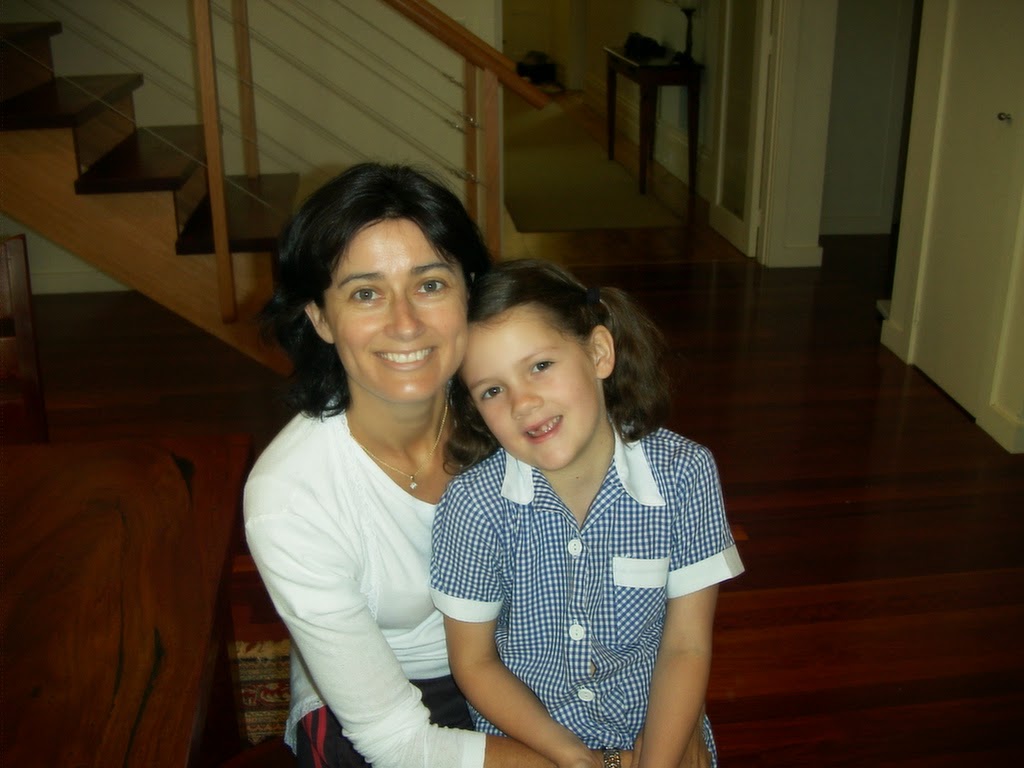
School Years with Mum. 
Mothers keep the world spinning. 

As cliche as it might sound - My mum really is my best friend. 

She is the first person I go to when I need advice, the last person I kiss goodnight, she is the only one I would truly trust with my life. 

Peas in a Pod. 
"God could not be everywhere, and therefore he made mothers"   
- Rudyard Kipling

Rhonda Hopkins is everyone's favourite Mum. She is fun, adventurous, helpful, loving, caring, but knows when to be tough.

She knows when you're down and something is wrong, even if you don’t shout it out like a song. She will give you a hug, or just a good talk, she will make you see the good in life.

I can not imagine a world without my Mum, she is the ying to my yang, the peanut butter to my jelly, the tim to my tam, the twinkle to my star.

Mum you are the smile to my face and I will be forever in your debt, because the love you have given me is irreplaceable and I will never forget.

3 Generations.  

“A mother is the truest friend we have, when trials heavy and sudden fall upon us; when adversity takes the place of prosperity; when friends desert us; when trouble thickens around us, still will she cling to us, and endeavor by her kind precepts and counsels to dissipate the clouds of darkness, and cause peace to return to our hearts.”

― Washington Irving


Mum & I at my Year 11 Formal. 

Wednesday, May 6, 2015

Friendship.

         I cannot even imagine where I would be today were it 

not for that handful of friend who have given me a heart full 

of joy.  Let's face it, friends make life a lot more fun. 

- Charles R. Swindoll


Grateful for all my friends, who support me in everything I do.
 I know I can always call on them for advice, a chat or even just to sit in their presence.
Never underestimate the power of friendship. 


          True friendship multiplies the good in life and divides

its evils. Strive to have friends, for life without friends is like

life on a desert island... to find one real friend in a lifetime is

good fortune; to keep him is a blessing.


- Baltasar Gracian

Sunday, May 3, 2015

The not so Happy Ending.

Everyone remembers his or her last day of school. The freedom, excitement and celebration of finally finishing.

Mine, however, was not as anticipated. It turned out to be a day of sadness, tears and disbelief.  I found myself having to execute adaptive leadership skills.

It had been a tradition for years to share an early morning breakfast, and move to a final whole school assembly dedicated to the Year 12s. It was considered a highlight for the school year.  I had two speeches ready; one I had looked forward to delivering all year, the speech to my fellow School Co-Captain, Bridie.

However, instead of our celebratory 7:15am breakfast, we were ushered in complete silence to the hall. We had no idea what was going on. Over a long four hours of “interrogation” (as some later described it) we were told that during the evening before some girls had taken “muck up day” activities too far. In a school that has a zero tolerance on muck up celebrations, consequences would follow for the whole cohort.

The verdict: Everything cancelled, everyone sent home.   

What our whole year had come to, the final pinpoint in the straw had now been taken away from us.

I will never forget the look of devastation, anger and shock painted on every girls face. The 75 girls I had led all year with Bridie were being punished for the actions of a few.  It had been the perfect year, but we did not receive the perfect ending.  

The effects of the decision were far-reaching for both students and teachers. It is difficult to explain how much this day meant to everyone, but for a while the decision broke the school community apart.

In such an important time (one week until VCE exams), I could not let the girls loose sight of what was “essential and what [was] expendable” (Heifetz, Grashow & Linsky 2010). We were in a period of disequilibrium. The 2014 cohort were imbalanced and lost, girls weren’t focused; many wasting time writing letters to the school instead of studying. They needed to be reminded of the bigger picture.

I wanted to “help people navigate through a period of disturbance.” As a School Co-Captain, my loyalties lay with my cohort. I knew these girls, I knew how hard they had worked all year, and I was not willing to let them forget that.  

To deal with the swirling emotions surrounding me I did two things; Firstly, I managed myself in the environment. I mentally chose to push aside the negative and distracting thoughts by putting them into a tiny box in my brain and locking it away.

Secondly, this then allowed me to “help people tolerate the discomfort they [were] experiencing.” I believed that my scope of authority permitted me to remind them whom they truly were, something I deemed important. My goal was to keep the temperature of emotions within the “productive zone of disequilibrium (PZD).” Heifetz, Grashow and Linsky (2010) classify this as a zone where people are “mobilized to focus and engage with the problem.” To me this would be a zone where all girls would focus on their studies.

My relationship with the girls allowed me to utilized the notion - “solutions are offered based on trust and a mutual understanding.” I decided the following day to “counteract tactics” via posting the Year 12 reflection video I had been making all year. In a Facebook post targeting both the Year 12s as well as the rest of the School, I acknowledged the loss in a quote 
“Unless you have bad times, you can't appreciate the good times” – Joe Torre,” 
and stressed to the cohort the importance of returning to a safe PZD temperature.

The Facebook Post the day after with the video. 


Persistence and patience was needed, however I believed, not only as an elected leader and authority figure, but also as a person, that it was important to restore the “purpose and values” that were “at the center of [the girls} being” (D’Souza & Renner 2014).  They needed a place of balance and equilibrium. Every girl deserved the chance to achieve her best, and I wanted to ensure that happened.

Girls reactions and comments left on the post.
Girls reactions and comments left on the post
Girls reactions and comments left on the post.


Side note: As the post was viewed, it seemed to have a calming effect on the cohort “makes me remember all the awesome times” one girl commented. We have since received a sorry letter from the Leadership team regarding their decision. I am still in contact with teachers and the school. I miss it very much.


References
Alex Hopkins 2014, Vale to Sacre Coeur Class of 2014, online video, viewed 1 May 2015, https://www.youtube.com/watch?v=rXm7DPgh1K4

D’Souza, S & Renner, D 2014, Not Knowing, LID Publishing Ltd, United Kingdom.

Skankman, M.L, Allen, S.J & Haber-Curran, P 2009, Emotionally Intelligent Leadership, Joessy-Bass, San Francisco.

*Pictures are screen shots of my own Facebook post, with names omitted for privacy*